
Expertise
Catheter-Based & Endovascular Devices
Alentra PD applies clinically informed design, technical rigor, and medical device development experience to complex catheter-based and endovascular programs. From early concept and feasibility through development, testing, and commercialization, we help teams navigate the technical challenges that shape device performance, manufacturability, risk, and successful execution.
EXPERTISE
Catheter-Based & Endovascular Devices
Alentra PD applies clinically informed design, technical rigor, and medical device development experience to complex catheter-based and endovascular programs. From early concept and feasibility through development, testing, and commercialization, we help teams navigate the technical challenges that shape device performance, manufacturability, risk, and successful execution.
EXPERTISE OVERVIEW
Experience-driven solutions for complex catheter programs
Bringing a novel catheter concept to life requires more than solving an isolated engineering problem. Clinical requirements, device performance, materials, manufacturability, testing, risk, and commercialization considerations are interconnected, and decisions made early in development can influence the entire program.
Discuss your program
Clinically Informed Design
Consider clinical requirements, relevant anatomy, procedural needs, and how the device will be used as the design develops.
Technical Rigor
Apply engineering, materials evaluation, prototyping, and testing to address demanding performance requirements and technical constraints.
Path to Manufacturability
Consider manufacturability early so design decisions can support reliable production, cost management, and future commercialization.
DEVICE TECHNOLOGIES & APPLICATION AREAS
Catheter technologies and application areas
Alentra PD's catheter development experience spans a range of technologies with different clinical, mechanical, materials, and manufacturing requirements. This breadth helps the team approach new programs with experience across multiple catheter architectures and applications. Experience also includes cardiac catheters with integrated sensor technology.
Steerable Delivery Catheters
ECMO Catheters
Catheter & Implant Systems
Compliant Balloon Catheters
Tissue Ablation Catheters
Visualization & Illumination Catheters
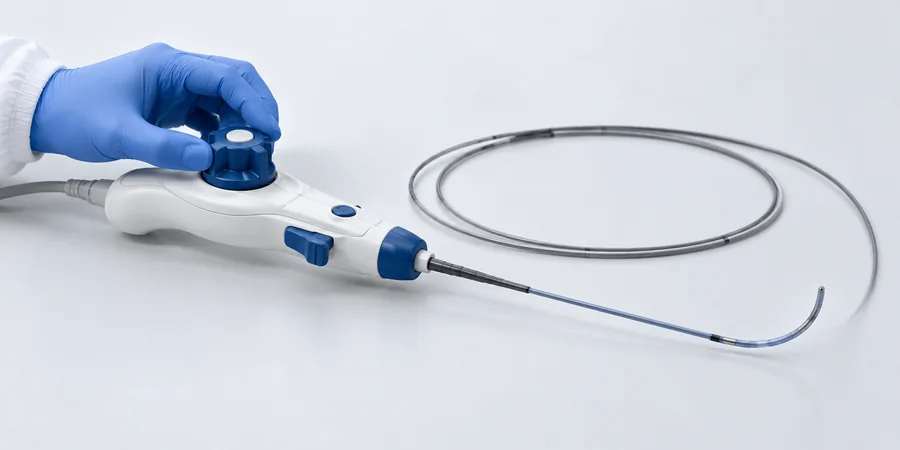
Steerable Delivery Catheters
Steerable delivery catheters are designed to provide greater control and flexibility while navigating complex anatomical pathways. Their development requires careful consideration of how navigation, positioning, and delivery requirements influence the overall device design.
- Support controlled navigation through complex anatomy
- Provide greater flexibility during device delivery
- Help support accurate positioning
- Balance procedural requirements with device performance
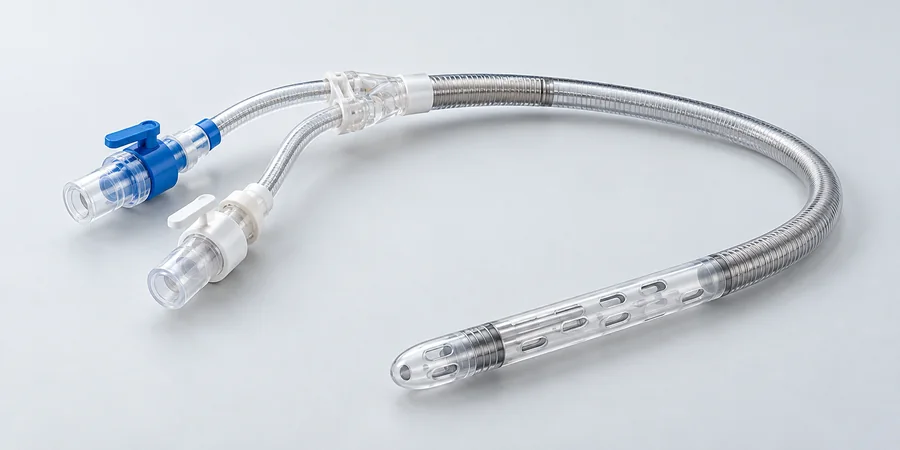
ECMO Catheters
ECMO catheters support extracorporeal membrane oxygenation systems used to provide respiratory support for critically ill patients. Their role within an extracorporeal circuit creates specialized requirements around device function and intended clinical use.
- Developed for extracorporeal membrane oxygenation applications
- Support respiratory-assistance systems
- Connect the patient with the extracorporeal circuit
- Designed around demanding critical-care applications
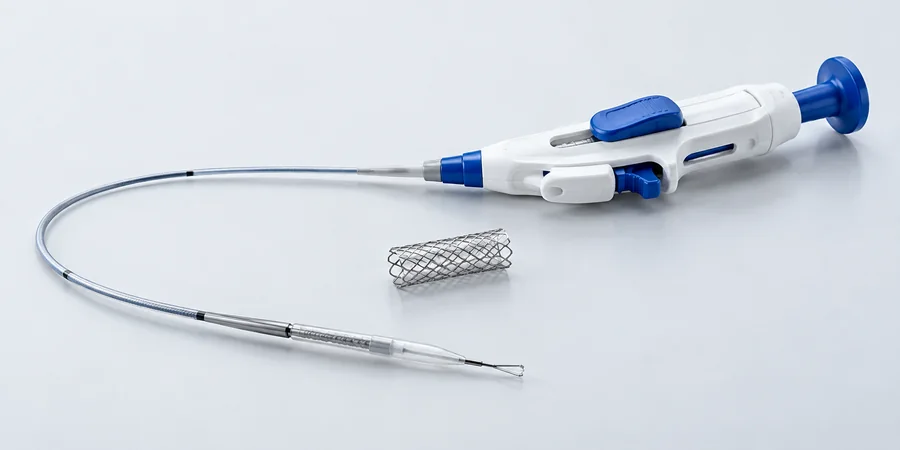
Catheter & Implant Systems
Catheter and implant systems combine a delivery device with an implantable component to support minimally invasive approaches to treatment. Development requires the delivery system and implant to function together as an integrated device system.
- Combine catheter delivery with an implantable device
- Support minimally invasive treatment approaches
- Coordinate implant and delivery-system requirements
- Provide alternatives to more traditional surgical approaches
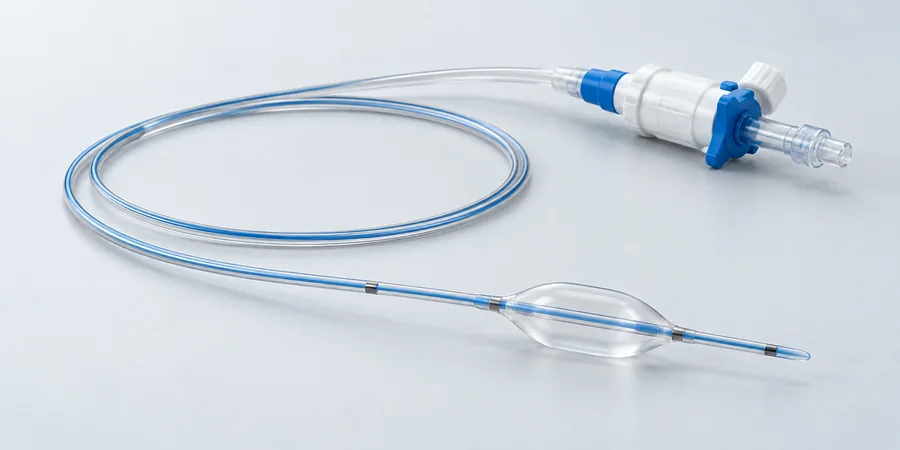
Compliant Balloon Catheters
Compliant balloon catheters use low-pressure, volume-inflated balloons designed to conform to patient anatomy. Their ability to adapt to anatomical shape supports applications where occlusion or sealing is required.
- Low-pressure balloon design
- Volume-inflated operation
- Conform to patient anatomy
- Support occlusion and sealing applications
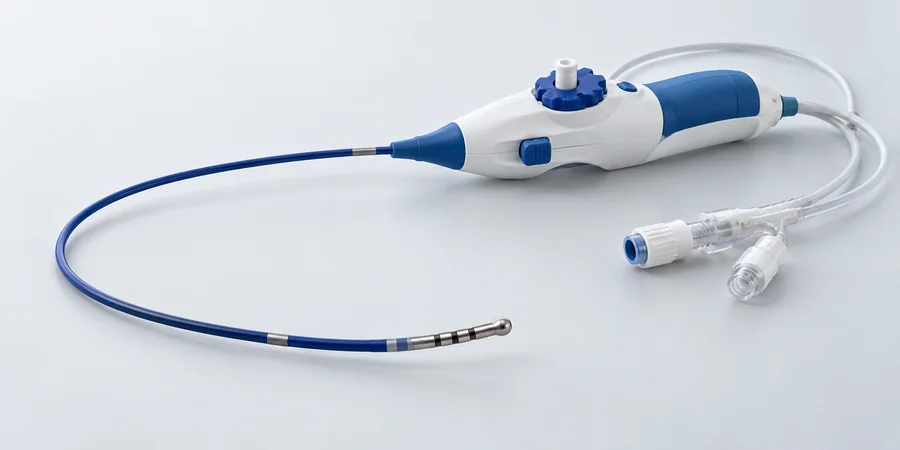
Tissue Ablation Catheters
Tissue ablation catheters are designed to deliver controlled thermal energy to targeted tissue. Their development centers on delivering energy to the intended treatment area with the control required by the procedure.
- Deliver controlled thermal energy
- Target specific tissue
- Support focused tissue-ablation procedures
- Require controlled delivery at the treatment location
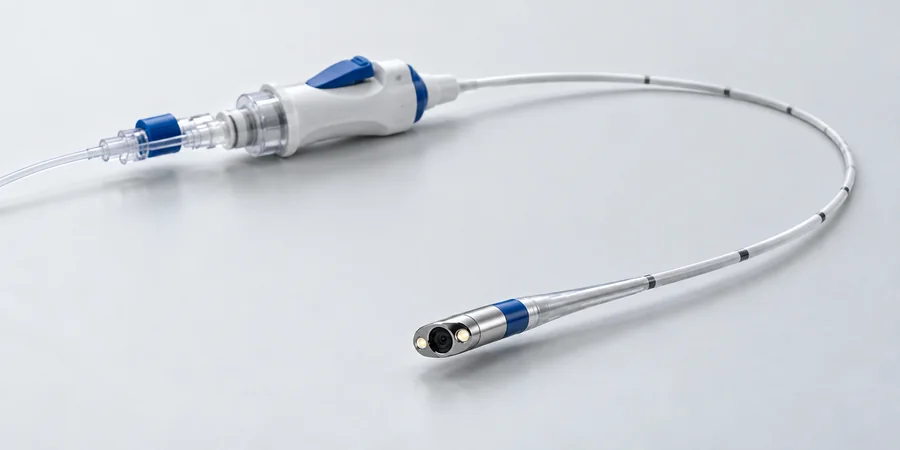
Visualization & Illumination Catheters
Catheter systems can incorporate visualization and illumination technologies to improve visibility during procedures. These technologies support clearer procedural views in areas where direct visibility may otherwise be limited.
- Integrate visualization technologies
- Incorporate illumination capabilities
- Improve procedural visibility
- Support access to areas with limited direct visualization
DEVELOPMENT CONSIDERATIONS
What shapes a catheter-based program
The performance of a catheter-based system can depend on interconnected clinical, mechanical, materials, testing, and manufacturing decisions. Addressing these considerations together helps teams evaluate the device as a complete system throughout development.
Clinical Use & Anatomy
Understand the intended procedure, anatomical pathway, target location, and use requirements that influence device architecture and performance.
Performance & Delivery
Consider requirements such as flexibility, profile, navigation, deliverability, positioning, handle and control design, steerability, advanced functionality, and deployment where applicable to the device.
Materials & Construction
Evaluate materials, component approaches, and custom shaft optimization in relation to performance, dimensions, flexibility, strength, and intended use.
Manufacturability, Cost & Risk
Consider how engineering decisions can affect manufacturing, assembly, development risk, cost, scale-up, and the eventual path toward commercialization.
SUPPORTING CAPABILITIES
Connected support across development
Catheter programs can require support across multiple disciplines and stages of development. Alentra PD brings together capabilities that can support a program from early investigation and engineering through testing, program execution, quality considerations, and manufacturing.
Early Concept & Feasibility
Explore requirements, concepts, early prototypes, and technical approaches to help establish feasibility before detailed development.
Product Development
Advance concepts through engineering, detailed design, risk management, documentation, component decisions, and preparation for manufacturing.
Prototyping & Testing
Build and evaluate prototypes, develop test methods, and use testing to investigate performance and guide design refinement.
Project Management
Plan, execute, and monitor program activities to provide visibility into progress, timing, cost, and emerging issues.
Contract Manufacturing
Support early and low-to-mid-volume builds, assembly development, fixturing, and preparation for future scale.
Quality & Regulatory Support
Connect development activities with quality, documentation, risk management, testing, and regulatory considerations.
Explore more capabilities that move your program forward.
View all capabilities
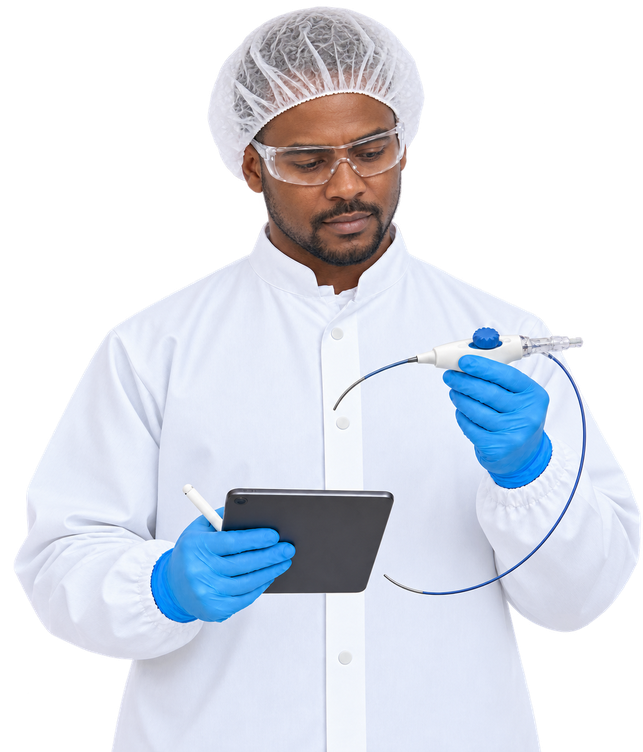
QUALITY & REGULATORY
Quality that supports catheter development
Quality and regulatory considerations should remain connected to the engineering work as a catheter program progresses. Requirements, risks, testing, documentation, and manufacturing considerations all contribute to building a disciplined development record around the device.
- Design Requirements & Documentation
Maintain defined requirements and supporting engineering documentation as the design evolves. - Risk Management
Identify and evaluate risks throughout development and use findings to help inform design decisions. - Testing & Evaluation
Develop appropriate methods for evaluating device performance and documenting results. - Manufacturing Considerations
Connect design decisions with assembly, process, and manufacturing requirements as development progresses.
EXPLORE MORE
Related expertise
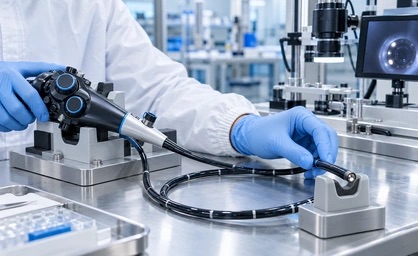
Endoscopic & Minimally Invasive Devices
Explore development experience for endoscopic and minimally invasive medical devices.
Explore expertise
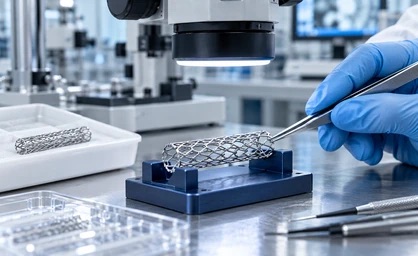
Implants
Explore the design and development considerations behind implantable medical devices.
Explore expertise
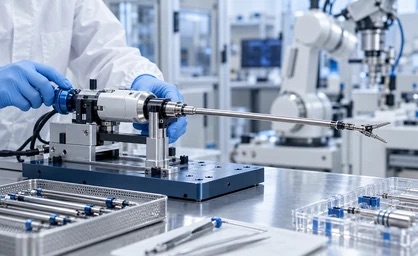
Surgical & Robotic Devices
Explore development experience related to surgical instruments and robotics-related medical devices.
Explore expertise

Single-Use Disposables & Diagnostics
Explore development for single-use and diagnostic devices where performance, consistency, manufacturability, and cost are important program considerations.
Explore expertise
Ready to move your catheter program forward?
Talk with Alentra PD about the engineering, development, testing, quality, and manufacturing needs behind your catheter-based or endovascular device program.