
Capability
Industrial & Human-Centered Design
Alentra PD combines industrial design, engineering, ergonomics, and usability considerations to create medical products that are intuitive to use, technically sound, and practical to manufacture.
Capability
Industrial & Human-Centered Design
Alentra PD combines industrial design, engineering, ergonomics, and usability considerations to create medical products that are intuitive to use, technically sound, and practical to manufacture.
INDUSTRIAL & HUMAN-CENTERED DESIGN
Design around the people who Use It
Industrial & Human-Centered Design brings the user experience and the engineering together. Alentra PD considers how a product is held, viewed, controlled, and used while balancing mechanical requirements, product architecture, safety, and manufacturability.
Start your project
Ergonomics & Handling
Shape products and controls around the physical interaction required during real-world use.
Form & Product Architecture
Develop form and product architecture around internal components, structural needs, and intended use.
Usability & Interaction
Consider how users operate, read, control, and interact with the product throughout a procedure or task.
Engineering Integration
Work alongside engineering so usability, performance, cost, and manufacturability are considered together.
DESIGN CAPABILITIES
Shape the experience. Solve the engineering.
Human-centered design is not separate from engineering. The work brings ergonomics, form, controls, usability, and technical requirements together as the product takes shape.
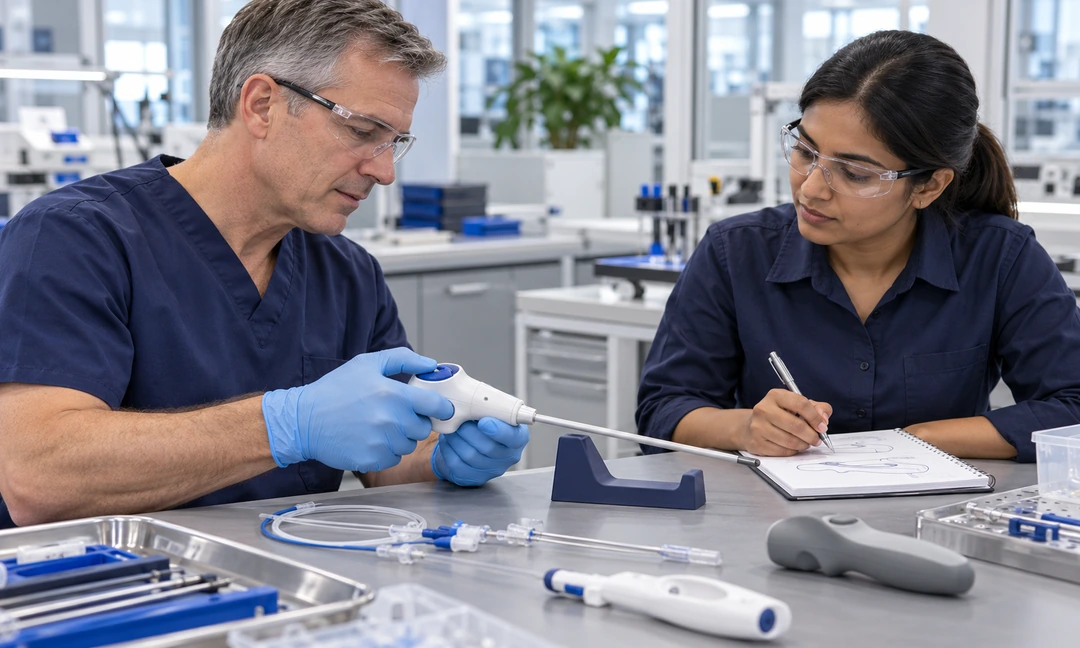
Design for the people using the product
Ergonomics and usability influence how a product feels, handles, and performs in the hands of the people using it. These considerations are developed alongside mechanical, safety, and technical requirements rather than added at the end.
Human Factors & Use Considerations
Consider user interaction, handling, visibility, and workflow when defining and refining the design.
Form & Product Architecture
Develop the product form and physical architecture around internal components, structural needs, and intended use.
Controls & User Interaction
Shape handles, controls, displays, and other interaction points around clear, practical operation.
Industrial Design & Engineering Integration
Connect industrial design with detailed engineering and manufacturability so the experience and the product work together.
From concept through commercialization, explore the capabilities that move medical device programs forward.
View all capabilities
OUR PROCESS
A human-centered path through design
1
Understand Use Needs
Clarify how the product will be held, viewed, controlled, or operated in its intended use context.
2
Explore Design Directions
Develop design directions that address form, interaction, ergonomics, and technical requirements.
3
Prototype & Evaluate
Create and evaluate prototypes to understand handling, usability, fit, and design tradeoffs.
4
Refine the Experience
Refine the form, controls, ergonomics, and product architecture based on what is learned.
5
Integrate for Development
Carry the selected design forward with engineering, documentation, and manufacturability in mind.
COLLABORATION & DESIGN TRADEOFFS
Balance the experience with the engineering
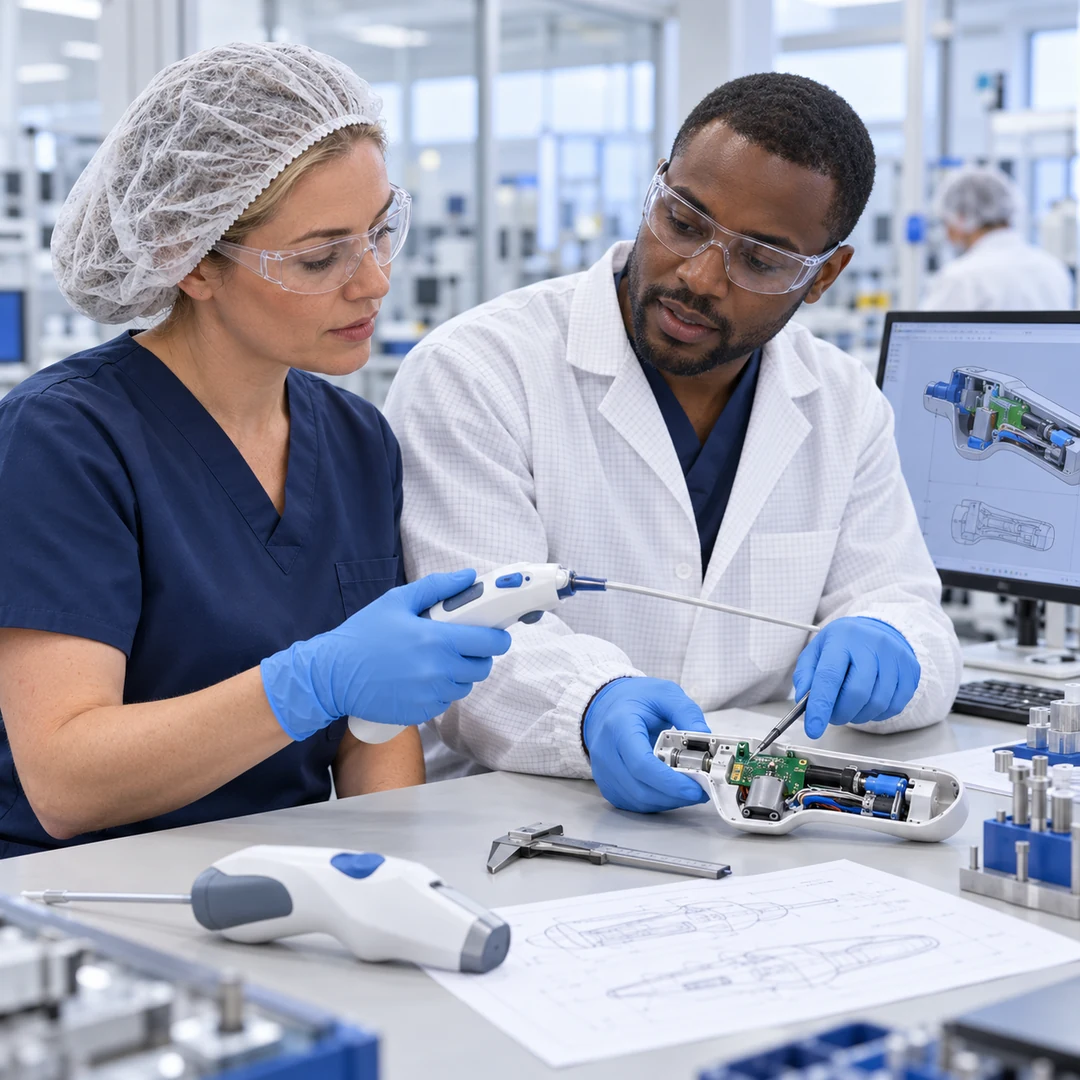
Human-centered design often requires tradeoffs. Alentra PD works collaboratively to balance ergonomics and usability with mechanical requirements, component space, safety, cost, and manufacturability as the design evolves. For Circinus Medical’s Bolt Navigation System, the Sage team improved ergonomics and addressed manufacturing cost, validation, and inspection requirements.
Device & Clinical Relevance
Relevant device & clinical expertise
Industrial and human-centered design experience spans products where handling, controls, ergonomics, and user interaction are central to performance.
Endoscopic & Minimally Invasive Devices
Experience with ergonomic hand-operated controls and instruments for endoscopic and minimally invasive procedures.
Explore this expertise
Surgical & Robotic Devices
Experience shaping surgical technologies around clinician interaction, workflow, and practical use.
Explore this expertise
Electro-Mechanical Devices & Capital Equipment
Experience with handheld and electro-mechanical products that integrate controls, displays, electronics, and structural components.
Explore this expertise
Catheter-Based & Endovascular Devices
Experience with catheter-based products where handle design, control, steerability, and user interaction can be critical.
Explore this expertise
Ready to improve how your product is used?
Tell us how your product is used, where interaction challenges exist, and what needs to improve as the design moves forward.

QUALITY & REGULATORY
Human-Centered Design Within a Regulated Framework
Ergonomics and usability decisions must work alongside safety, engineering, documentation, and regulatory requirements. Alentra PD integrates industrial design into the broader development process so experience-focused decisions remain grounded in technical and regulated-product needs.
- ISO 13485:2016 quality management system
Quality systems provide a foundation for disciplined medical-product design and development. - Safety & Risk Considerations
Human interaction is considered alongside technical risks, safety requirements, and product performance. - Integrated Design & Engineering
Industrial design and detailed engineering are developed together to support a coherent product solution. - Documentation & Regulatory Support
Design decisions can be carried forward into documentation and regulatory activities as the program advances.
WHAT COMES NEXT
Related capabilities
Early Concept & Feasibility
Explore user needs, concepts, prototypes, and feasibility before a design moves into deeper development.
Explore Early Concept & Feasibility
Product Development
Carry industrial and human-centered design into detailed engineering, testing, documentation, and manufacturing preparation.
Explore Product Development
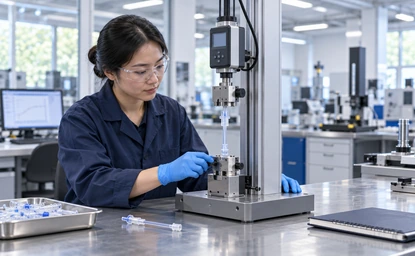
Prototyping, Test Methods & Verification / Validation
Build and evaluate prototypes, develop test methods, and perform verification and validation activities as the design advances.
Explore Prototyping & Testing
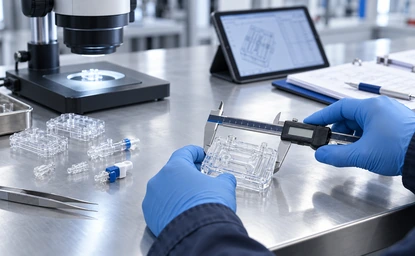
Quality & Regulatory Support
Connect design decisions with quality systems, risk management, documentation, and regulatory support.
Explore Quality & Regulatory
Let's design a better product experience
Share how your product will be used, the interaction challenges you are solving, and the technical requirements shaping the design.