
WHY ALENTRA PD
Our Approach & Development Process
A structured, collaborative approach helps keep technical work, program priorities, and downstream needs aligned as a medical device moves from early concept through commercialization.
WHY ALENTRA PD
Our Approach & Development Process
A structured, collaborative approach helps keep technical work, program priorities, and downstream needs aligned as a medical device moves from early concept through commercialization.
HOW WE WORK
A collaborative process built around your program.
Every program brings different technical questions, priorities, and constraints. The work is structured to maintain alignment while remaining flexible to the needs of the program.
Discuss your program
Collaborative Planning
Align on objectives, technical needs, priorities, and the work required for the next stage before moving forward.
Clear Communication
Keep decisions, changes, dependencies, and next steps visible so the team can work from a shared understanding.
Flexible Engagement
Adjust the scope and level of support as the program evolves, while maintaining continuity between development stages.
THE DEVELOPMENT PROCESS
A clear path from concept to commercialization
The work changes as a device advances. This five-stage framework keeps development activities connected while allowing each program to progress according to its technical needs and priorities.
1
Concept & Feasibility
Define the need, establish initial requirements, explore concepts, and evaluate early technical feasibility.
2
Design & Development
Develop the selected direction through engineering and detailed design, with risk and manufacturability considered as the design evolves.
3
Prototyping & Testing
Build and evaluate prototypes, develop appropriate test methods, and use findings to guide design refinement.
4
Design Transfer
Prepare the design, assembly approach, documentation, and other information needed to support manufacturing.
5
Commercialization
Support the transition into launch and production activities based on the needs and next milestones of the program.
KEY DECISION POINTS & DELIVERABLES
Clear milestones.
Defined outcomes.
Requirements & Design Inputs
Capture the needs, intended use, and design inputs that guide concept and development decisions.
Prototypes & Test Findings
Use prototype evaluation and test findings to answer technical questions and inform design refinement.
Documented Design Decisions
Record important engineering decisions, changes, and supporting rationale as the design develops.
Transfer-Ready Documentation
Prepare the design and manufacturing information needed to support the transition into production.
PROJECT MANAGEMENT ACROSS THE PROGRAM
Keeping your program on track.
Medical device development involves technical work, schedules, budgets, dependencies, and changing priorities. Structured project management helps keep those elements visible and coordinated throughout the program.
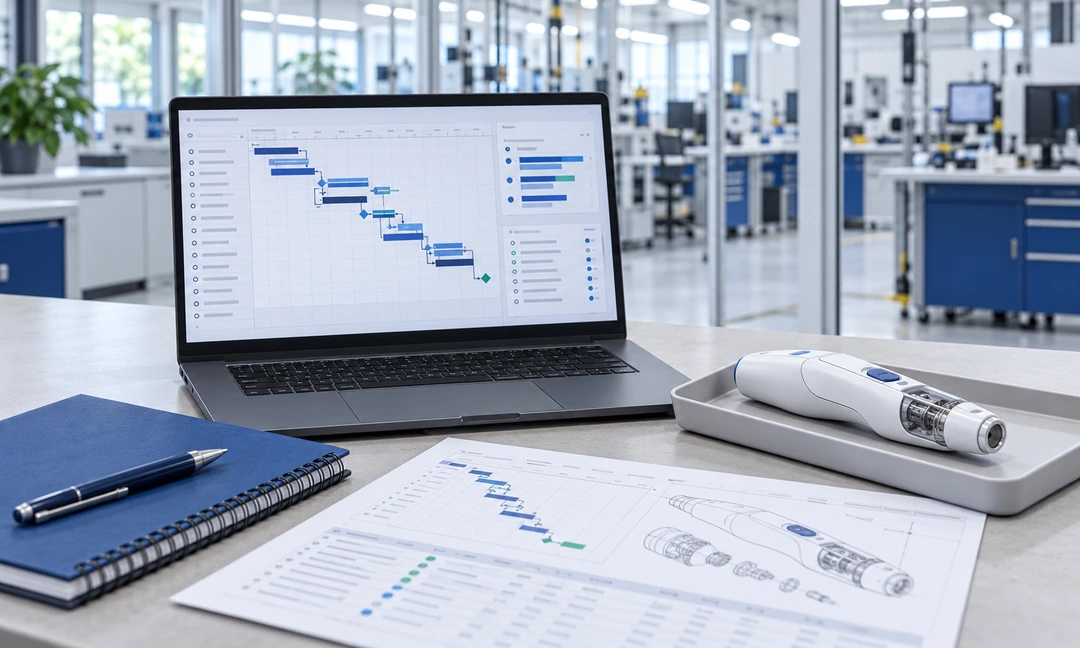
Program Planning
Define scope, priorities, activities, responsibilities, and key milestones to organize the work ahead.
Execution & Monitoring
Track progress against the agreed plan and keep technical activities, timing, and responsibilities coordinated.
Schedule & Budget Visibility
Maintain visibility into timing and resource use so potential issues can be identified and discussed earlier.
Change & Dependency Coordination
Identify changes and cross-functional dependencies that may affect the next decision, milestone, or stage of work.
Have a project in mind?
Tell us where your program stands and what you need to accomplish next. We can discuss an approach that fits the work ahead.